

)
September 2026
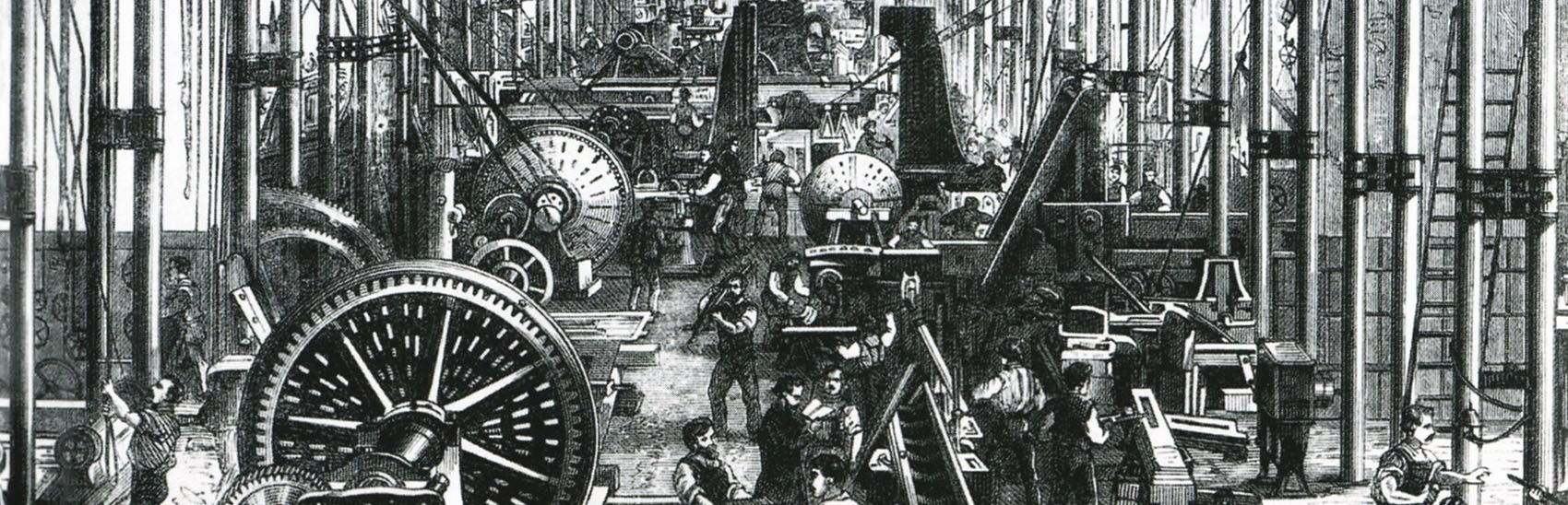
► Introduction of Mechanical Production Facilities (18th Century)
► Transition to Mass Production Based on Electricity and Division of Labor
► Automation of Production Processes (20th Century)
► Autonomous Machines and Virtual Environments (21st Century)
Industry 4.0 is a collective whole of technologies and value chain organization concepts. It is based on the concept of cyber-physical systems, the Internet of Things and the Internet of Services. This structure contributes greatly to the vision of smart factories. Industry 4.0 generally consists of the following 3 components.
► Internet of Things
► Internet of Services
► Cyber-Physical Systems
Within modular smart factories, Industry 4.0 aims to monitor physical processes with cyber-physical systems, create a virtual copy of the physical world and make decentralized decisions. Through the Internet of Things, cyber-physical systems will be able to communicate and cooperate with each other and with people in real time. Through the Internet of Services, both internal and cross-organizational services will be offered and used by the participants of the value chain.
Industry 4.0 is based on 6 principles.
1) Interoperability: The ability of cyber-physical systems (e.g. workpiece carriers, assembly stations and products), people and smart factories to communicate with each other over the Internet of Things and the Internet of Services.
2) Virtualization: A virtual copy of smart factories, created by linking sensor data with virtual plant and simulation models.
3) Decentralization: The ability of cyber-physical systems within smart factories to make their own decisions.
4) Real-Time Capability: The ability to collect and analyze data, which enables insights to be gained quickly.
5) Service Orientation: Services of cyber-physical systems, people and smart factories are offered over the Internet of Services.
6) Modularity: Provides flexible adaptation of smart factories to the changing requirements of individual modules.
Production in an Industry 4.0 system is likened to a system in which machines offer services and share information with products in real time. The German Research Center for Artificial Intelligence (DFKI) demonstrates how such a system works in practice at a small smart factory in Kaiserslautern, Germany, set up with the contribution of 20 industrial and research partners including Siemens. It uses soap bottles to show how products and manufacturing machines can communicate with each other. The empty soap bottles carry radio frequency identification (RFID) tags, which allow the machines to recognize the color of the bottles. Thanks to this system, the information a product transmits via radio signals can be stored digitally from the very start of production. In this way it emerges as a cyber-physical system.
► Easier system monitoring and fault diagnosis
► Self-awareness of systems and their components
► Sustainability through environmentally friendly and resource-saving system behavior
► Higher efficiency
► Increased flexibility in production
► Reduced costs
► Development of new service and business models

)
)
Fill out the form below and choose the demo for the product you require.